Mastering AARP Mahjongg Dimensions: Tips, Tricks, and Gameplay Guide
If you’ve played standard Mahjongg Solitaire before, Mahjongg Dimensions will feel familiar for about thirty seconds — and then the third dimension kicks in and changes everything. The core idea is the same: match identical tiles, clear the board. But the 3D layout adds a spatial layer that takes some adjustment, and once it clicks, it becomes genuinely hard to put down.

What It Actually Is
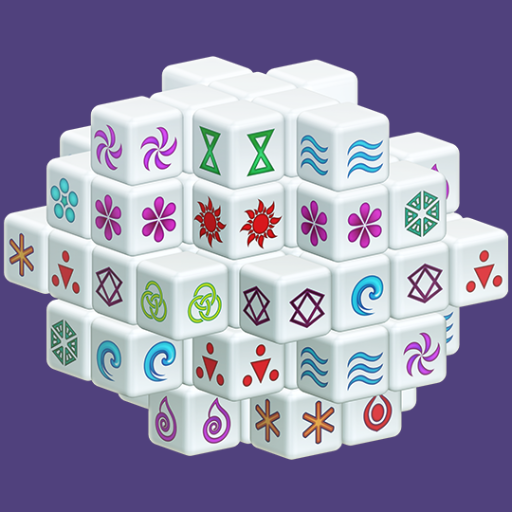
AARP Mahjongg Dimensions is a 3D twist on classic Mahjongg Solitaire. Instead of a flat board, tiles are stacked in multi-layered three-dimensional structures. You’re still matching identical pairs to remove them, but the perspective means some tiles are hidden behind or beneath others in ways that aren’t immediately obvious.
The same core rule applies — a tile has to be unblocked before you can select it — but reading which tiles are free and which aren’t takes more spatial awareness than the 2D version. That’s the learning curve, and it’s steeper than it looks at first. Give it a few sessions and it starts to feel natural.
The game runs in browsers and on mobile, so there’s no download required. You can pick it up wherever you happen to be.
The Basics Worth Understanding
Before anything else, get comfortable with which tiles are actually available to you. In 3D Mahjongg, a tile is playable only if nothing is sitting on top of it and at least one side is open. The tricky part is that the three-dimensional view can make this harder to assess than it sounds — tiles that look accessible sometimes aren’t, and tiles that look buried sometimes have a clear side you missed.
Take a moment at the start of each game to actually read the structure before making any moves. Where are the deep stacks? Where are the exposed tiles that will open things up? That initial scan is worth more than people give it credit for.
Tips for Beginners
Work from the top down. Tiles on the upper layers are blocking access to everything underneath them. Clearing the top first is almost always the right priority, even when there are tempting matches available lower down.
Don’t just match whatever’s available. The most visible pair isn’t necessarily the right pair. Before you click, ask whether this match opens up new tiles or just clears two that weren’t blocking anything important. The second kind of match is often less valuable than it feels.
Use hints sparingly. Most versions of the game offer hints, and they’re genuinely useful when you’re stuck. The temptation is to lean on them regularly, but players who do that tend to stop developing the spatial reading skills that make the game satisfying. Save them for when you’re genuinely stuck, not just impatient.
Slow down when it gets complicated. The 3D perspective creates moments where the board looks completely overwhelming. Those are usually the moments that reward slowing down rather than speeding up. One tile at a time, read the structure, find the move.

Advanced Strategies
Once the basics feel comfortable, the game opens up into something more interesting.
Prioritize buried tiles. The tiles deepest in the structure are the ones most likely to cause problems later if you don’t think about them early. When you see a tile that’s going to be difficult to reach, work backward from it — what needs to move to get there, and in what order?
Watch for tile distribution. Each tile appears in multiple copies. If you’ve already matched three of a particular tile type and one copy is still buried deep in the structure, that fourth copy is going to be hard to clear. Knowing where your remaining tiles are and how accessible they look is a skill that develops with experience.
Balance speed and care. Some versions of Mahjongg Dimensions are timed or scored based on how quickly you clear tiles. Faster matches earn more points, which creates pressure to rush. The problem is that rushed matches lead to deadlocks — situations where the tiles that remain have no valid pairs accessible. Playing at a pace that’s quick but deliberate consistently beats playing fast and getting stuck.
Use power-ups at the right moment. Undo and reshuffle options, where available, are most valuable when the board is in genuine trouble — not just when you’re impatient with a slow stretch. Saving them for real emergencies is almost always the better choice.
Why the 3D Format Works
The three-dimensional layout isn’t just a visual gimmick. It genuinely changes how the game plays by adding a spatial reasoning component that flat Mahjongg doesn’t have. You’re not just pattern matching — you’re reading a structure, modeling it mentally, and making decisions based on what’s three layers down as much as what’s immediately in front of you.
That added layer of complexity is what makes Dimensions more engaging than standard Mahjongg for a lot of players. It keeps the brain more actively involved because autopilot isn’t an option — you have to keep reading the board as it changes.
What It Does for Your Brain
The cognitive benefits people associate with puzzle games show up clearly here. Tracking tile positions across a 3D structure exercises visual memory in a real way. Planning sequences of moves requires sustained attention and forward thinking. And the spatial awareness involved — modeling a three-dimensional object in your head and rotating it mentally — is a type of thinking that most games don’t engage with at all.
None of this makes Mahjongg Dimensions a brain training program. It’s a game, and it should be played as one. But the mental engagement is genuine, and regular players do tend to notice their pattern recognition improving over time.
Final Thoughts
AARP Mahjongg Dimensions is worth the initial adjustment period it asks for. The 3D perspective takes some getting used to, and the first few games will probably feel disorienting. Push through that and the game reveals itself as something genuinely satisfying — a puzzle experience that asks more of you than flat Mahjongg while keeping the same relaxed, patient rhythm that makes the format appealing in the first place.
Start from the top, think before you match, and give yourself time to read the structure. The rest follows from there.